Mad Philosopher
  • Main Blog
  • Daily Resource Suggestion
  • About
  • Contact
  • Support This Site
  • A Philosopher's 95 Theses

A Walk in the Woods

8/9/2015

0 Comments

 
Another novel finds its way onto the list of books I recommend for reading.  This one stands apart, though; rather than exploring the nature of free markets in an un-free world, or survival in a statist zombie apocalypse, today's recommendation is literally a story about A walk in the Woods.

Picture
Why am I recommending this one?  I am surprised, myself.  A nice couple that moved to the Shire as part of the Free State Project, (and, hopefully, my future co-workers) loaned me a copy of the book after a very pleasant conversation I had with them that covered subjects ranging from NVC, "ecumenical libertarianism", and the need for stable families of entrepreneurs in the Shire to naturalism, the relationship between classical music and death metal, and what it means to be a man.
Bill Bryson, in his book, "A Walk in the Woods" explores the existential nature of being a grown man in the developed world we live in attempting to walk the Appalachian Trail on a whim.  With a scathing sense of humor and striking self-awareness, Bryson recounts the tale of his adventure along the east coast with his equally unprepared companion, Katz.  He effortlessly transitions between telling his story and reciting interesting facts about the trail, the local wilderness, environmental science, and the shortcomings of government efforts to help nature do its job.
While he sometimes misses the mark on what he thinks ought to be done about those government shortcomings, he certainly has enough to say that anyone can learn through his experiences and knowledge.

Also, apparently, the book has been adapted to a decent movie that is currently in theaters as of September 8th, 2015 (but not for much longer).  I hope to catch it before it is pulled from theaters.
0 Comments

The New Badlands

3/9/2015

0 Comments

 
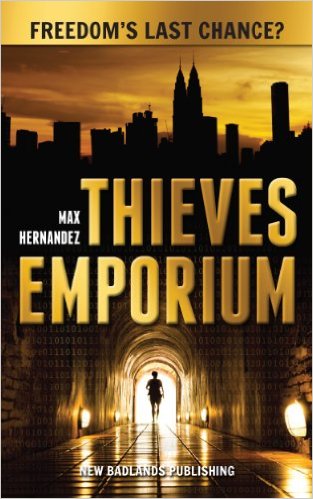
Today's resource suggestion is another book.  This one is available on amazon for purchase or, for free, in unabridged installments at The Daily Bell.  It is a fun novel which explores real technology, real cultures, and provides the reader with a new way of looking at the world and a set of actionable options for improving one's quality of life.

To call Thieve's Emporium a work of science fiction would be unfair.  While it somewhat defies genre, I guess it could be considered an educational drama?  The characters are largely fictional, but what they face and what they do are largely non-fiction.

I don't want to spoil too much of the plot, and I have not quite finished the book yet, but I strongly recommend people read this book.  With unlikely sympathetic characters in a world that is designed to marginalize them, and a slew of philosophical, moral, and ethical discussions that can and should be sparked by this work, It's certainly a good way to spend a lazy weekend.
Picture
0 Comments

Bastiat; a True Founding Father

19/8/2015

0 Comments

 
Today's resource suggestion is an excerpt from Economic Harmonies by Frederic Bastiat.
A 19th-Century philosopher and economist, Bastiat is credited with being one of the chief figures in classical liberalism which is, effectively, the progenitor of libertarianism and, ultimately, modern anarchism.
The excerpt is only 9 pages long, large-type, but it effectively expresses the basis of liberty and of the Anarcho-Capitalist position.  The first 8 paragraphs are filled with 19th century talk of God and creation and the created nature of man, but his more concrete observations made in and after these paragraphs can be confirmed and defended by atheists, too.
If reading isn't your forte or you desire a context for this work, I recommend reading Economic Harmonies or listening to/watching this lecture by Tom Woods.  It also provides a broader exploration of Bastiat's works, so it can be useful even after reading this excerpt.
0 Comments

Kuhn on Philosophy of Science

12/8/2015

0 Comments

 
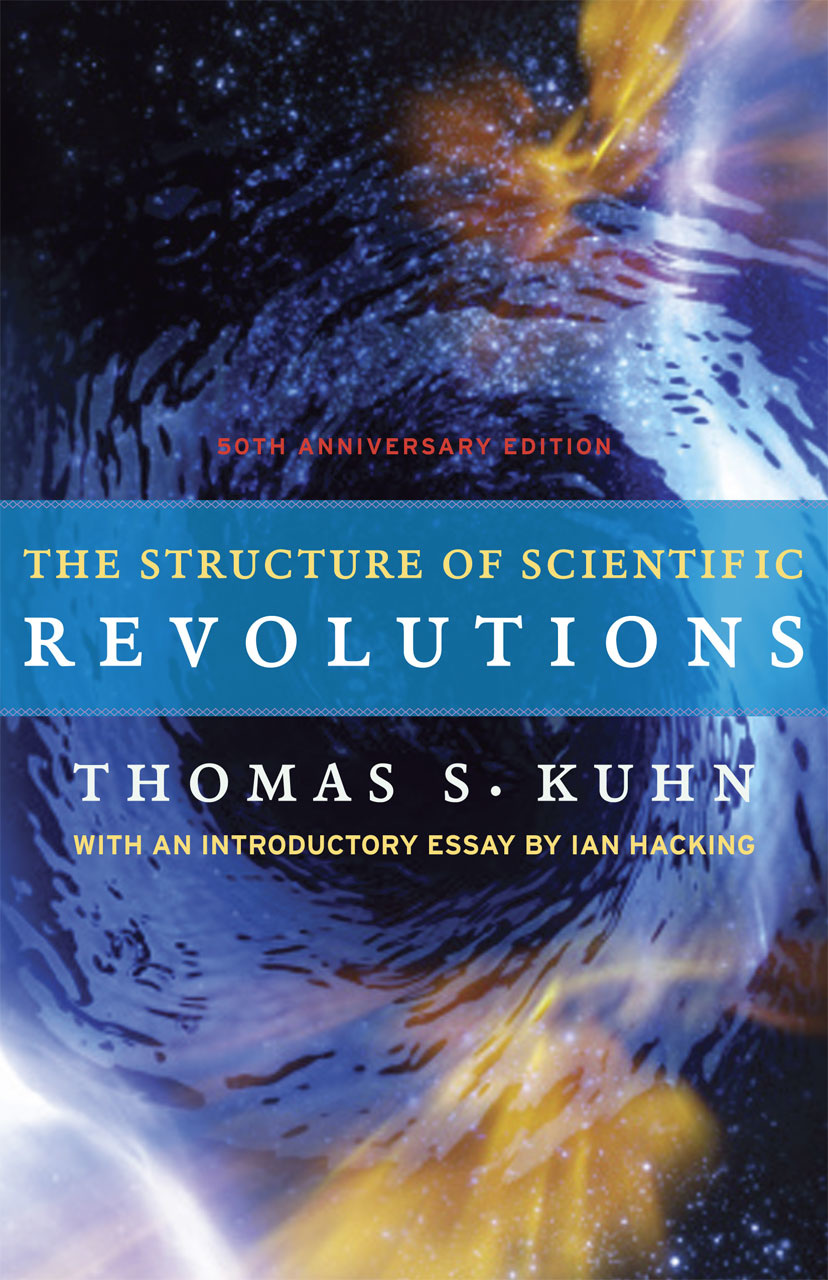
I've previously recommended reading Karl Popper's Conjectures and Refutations, as I feel Popper has provided the best set of epistemological tools and groundings for science to-date.  Thomas S. Kuhn is often trotted out as a more modern counterpoint to Popper, especially in his work in The Structure of Scientific Revolutions.  You can get the .pdf for free here, but I bought the book so I could write in the margins.
Picture
If anyone is familiar with Popper, Kuhn, and my own dabbling in epistemology, they will notice that the other two have influenced my epistemology dramatically.  Where many set up an opposition between Popper and Kuhn, I believe that antagonism (at least, in the realm of ideas and logic) is unwarranted.  Popper was engaged in a Bertrand-Russel-esque project of trying to use the tools of logic and reason to ground the functional applications of that logic in a manner consistent with the logicians' project.
Kuhn, on the other hand, is making an observation of the normative manner in which science is done.  Wielding the tools forged by Wittgenstein in the realms of language and cultural phenomena, Kuhn indirectly draws parallels between the manner in which science is actually done and the language games played in Wittgenstein's ontology.

Because of this difference in focus and approach, what results is Popper's "This is the epistemic grounding for the scientific exercise and methods" is set in opposition to Kuhn's "But this is what scientists are actually doing."  In reality, there can be a reasonable synthesis betwixt the two.  Popper, early on in Conjectures and Refutations, describes the different ontologies of the scientific method: essentialism/realism, instrumentalism, and what he calls "conjectures" but I like to call falsification (or, induction by falsifiability).  Popper makes a compelling case for falsification as the most cogent ontology of science.  Kuhn is, by his own admission, a staunch instrumentalist.
This instrumentalism is a matter of normativity.  In the case of the indirectly observable (particle physics, quantum mechanics, evolutionary and global climate sciences, etc.) Popper's defense of falsification and attack on instrumentalism begins to falter, but not fail.  Because instrumentalism has shown to get more quantifiable and marketable results (more journals published, more TV shows by Neil De Grasse Tyson, and more government grants), it has become the cultural MO for quite some time in the scientific community.

Kuhn explores the sociology and phenomena of scientific communities and the nature of change between different theories and methods of doing science.  Insofar as he is making normative claims, he does an excellent job of showing how things are done.  I feel that he fails in making claims as to how science should actually be done, essentially taking the normative case and saying that "it isn't fully developed yet, we ought to continue along this instrumentalist and diversified method of theory-making." without making a compelling case as to why that is the appropriate course of action.

This book, along with Poppers, is crucial to understanding the rationale and culture behind the claims made by physicists and philosophers of science today, especially when dealing with the limit-sciences of thins like quantum physics.  As a work of literature, it is a bit rough to read.  Where Popper takes 600-ish pages to explicate and defend 600 pages worth of material in a readable and concise manner, Kuhn takes 200-ish pages to explicate one central concept that could be done in less than 50 pages, applying the same rubric to multiple cases, over and over, in a manner that could be done more directly without losing any substance or rhetorical power.

There are more than one chapter in my unpublished book dedicated to epistemology and the synthesis between Popper and Kuhn, which have already strongly influenced certain blog posts, such as the post on Paradigmatic Awareness, in case one wants to explore related concepts before devoting time and money to reading the primary source.
0 Comments

Defending the Undefendable

30/7/2015

0 Comments

 
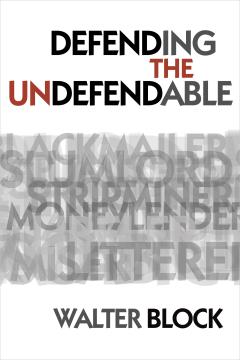
In the spirit of Rothbard, Walter Block presents a treatise on the relationship between crime and economic manipulation, semi-appropriate ethical indignation and the unintended consequences of using violence to try to prevent those ethically unappealing actions.
In Defending the Undefendable, Walter Block defends the heroin dealer, the speculator, the employer of child labor, and the man who screams "fire" in a crowded theater against accusations of economic perversity and harming the social order.  He does so quite effectively.  After reading this book, one who is educated in economics will have to seriously reconsider support of a minimum wage and legal prohibitions against child labor.
The introduction, written by Rothbard himself, makes it clear that while the people defended in Block's book are heroes because of the role they play economically and the adversity they face in reducing the friction of a politically-controlled economic system, this is not a moral defense of the particular actions the people make.  For instance, a heroin dealer could very well be a boon to the market and a hero in face of the evils of government while also perpetrating an immoral or unethical act (such as selling poison to people, even if it is a voluntary interactions).
As compelling, concise, and informative as the book is as a whole, there is one chapter, however, that doesn't seem to belong.  The defense of the "Male Chauvinist Pig" was less an economic defense of chauvinism and much more an incoherent and aggressive defense of feminist talking points, most prominent of which being the importance of abortion.  This defense of abortion is actually inconsistent with a much more compelling case he makes later on in the case of defending "The Employer of Child Labor".
All-in-all, though, this book is a must-read for anyone who believes in the free market but hasn't critically assessed their position on "the undefendable" as of yet, people who are genuinely interested in reducing crime and increasing the quality of life for the poor, and those that still believe that government violence can somehow improve the world.  Each chapter is a few pages long, very direct and to the point.

One can acquire the book for free in digital form from the Mises Institute, or purchase a hardcopy at Amazon.  I strongly recommend that you do so.
Picture
0 Comments

The Selling of The President 1968

24/7/2015

0 Comments

 
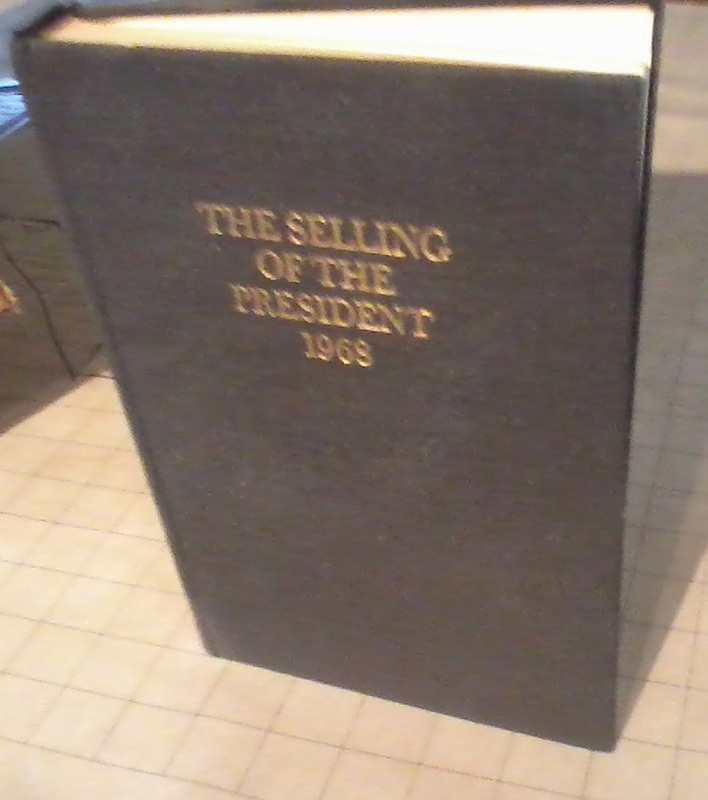
A few months ago, I stumbled across this book at a thrift store.  The title was provocative enough, and my very limited knowledge of post-World War american history informed me that it was probably about Nixon.  Nixon has always intrigued me, but not enough to actually try to learn anything about him.  I decided to correct that and bought this book for less than a dollar.
Picture
The book describes, in detail, the experiences of the men involved in Nixon's television campaign leading up to the election that made him President.  Why would an anarchist care about Nixon and how he became president?  To be honest, some of it is just morbid fascination with how we got to where we are.  The reason I am suggesting you read it, though, is because it serves as an excellent exposition as to how, exactly, television has altered our society as a political body and the new methods of advertising that removed any semblance of intelligence from the electoral competition.

The first half of the book is the actual story, while the second half of the book is a massive collection of the documents from the actual election team, which are even more interesting than the story, in my opinion.
http://www.amazon.com/The-Selling-President-Classical-Packaging/dp/0140112405
0 Comments

A Catholic Dayna Martin?

23/6/2015

0 Comments

 
A Little Way of Homeschooling: Thirteen Families Discover Catholic Unschooling is  an interesting work.  It simultaneously provides the more rigorous and analytic exploration of unschooling that I was looking for after reading Radical Unschooling and tries to answer a question that had never crossed my mind: "Can a Catholic home/unschool?"

What Suzie Andres calls "The Little Way of unschooling", I have been referring to as "the Tao of family life" for a while now.  The proper application of effort in the proper area of life.  Too much, and you break something, too little and nothing gets accomplished.  In the case of education and developing healthy relationships within the family, it requires a lot of focus and self-knowledge, unschooling seems to be an excellent method of discerning the proper application of effort.
Picture
I know I have been writing about primarily Catholic issues a fair amount lately, but pagan or atheist readers could easily take this book and exchange out references to trusting God to believing in the all-present life force or whatever or trusting in humanity and still get the same results.

Where I was already pretty much sold on unschooling before reading Radical Unschooling, my wife was suspicious before reading the book and then doubly so after reading that book.  In the interest of helping me out and giving my ideas a chance, she sought out this book herself at the library.  Now, she's almost totally sold on the idea, and I have the reading list in the back of the book to help me find more resources that may be directed more towards people such as myself.

I would strongly recommend that Catholics with children should read The Little Way of Homeschooling, even if they are happy with whatever schooling situation they are currently in.  If non-Catholics are pursuing unschooling, this resource may still be useful, but they may want to read Dayna Martin (if they are of a freedom-minded persuasion) or John Holt.
0 Comments

14 "Hard" Questions With "Easy" Answers

22/6/2015

0 Comments

 
Before any commenters speak up, I am totally aware that I plug a lot of Tom Woods on this part of the blog.  Some day, I will be plugging a lot of Rothbard and Spooner, but I need to get my priorities sorted out with them... they were very prolific writers and, while it would behove anyone and everyone to read the entirety of their works, I feel it would be prudent to focus on the highlight reel in this section.  I am doing the same with Woods, currently.

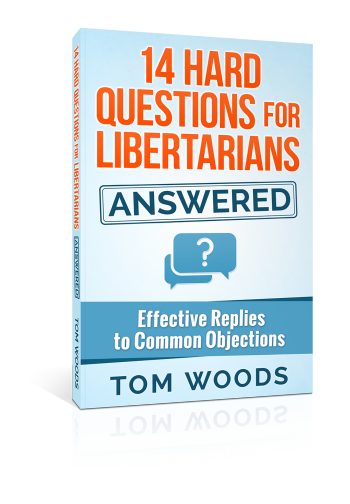
14 Hard Questions for Libertarians: Answered
is an excellent resource.  Where reading Rothbard and thinking things through from first principles (fundamental economics, the NAP, etc.) will inevitably produce the same or similar answers to those in this book, it is an amazingly simple and accessible resource for beginners, people who can't be bothered making freshman-level arguments with detractors, and people who may have done all the heavy lifting themselves and may have a couple blind spots.

I, personally, land in all three categories.  I'm an anarchist of only about two years, and I have a lot of catching up to do, I've already cited and linked to this book twice on facebook in arguments with people that are intelligent but ignorant, and was surprised to find myself reassessing some of my stances on things.  Most especially my position on Prisons in a Free Society
has come into question, and I've been inspired to do more reading in primary sources and more critical thinking about how I arrived at my position.  I expect to make a full blog post in the future, once I'm done researching and revising my position.
Picture
http://tomwoods.com/d/14questions.pdf
0 Comments

Antigone, a Role Model in Tragedy

8/6/2015

0 Comments

 
From Sophocles' Oedipus trilogy, Antigone is as powerful and as tragic as the other two works.  Antigone (the titular character and daughter of Oedipus and his mom), in my opinion, sets the example for all men and women of virtue, even 2,500 years after the story was written.

The poetry and power expressed in the play (more so in some translations than others) is tangible and should be enough to keep the reader's attention.  If it isn't though, the cast of The Partially Examined Life have done an excellent reading of the play , along with Lucy Lawless and Paul Provenza.
Picture
http://www.partiallyexaminedlife.com/2015/06/08/antigone-lucy-lawless-paul-provenza/
You can read their particular translation here.
0 Comments

Free Books? Sweet.

17/5/2015

0 Comments

 
Picture
Five days late, I have another daily resource suggestion.  I have a huge original content post that I've been working on all month, and life has really gotten ahead of me, but we will have some OC within the week, I promise.  lol
Today's suggestion is more of a tool, one which I will likely be posting specific resources from in the future.  Formerly Books Should be Free, the site is now Loyal Books.  This site is dedicated to spreading knowledge by way of making all books whose copyright protections have lapsed freely available to all.  For the most part, they are available in audiobook form, primarily through Librivox.  This has been a great resource for me, making audiobooks free so that I can listen to them while driving or working without paying more than the book costs for an audible subscription or comparable service.

Admittedly, because they are the "public domain" books, most of the books written in the last century are not available.  However, One can still get a primer in philosophy, reading/listening to primary sources and anarchy with Lysander Spooner.
Picture
0 Comments
<<Previous
    Picture

    Archives

    October 2015
    September 2015
    August 2015
    July 2015
    June 2015
    May 2015
    April 2015

    Categories

    All
    Anarchy
    AnCap
    AnCom
    Audiobook
    Behind The Scenes
    Behind-The-Scenes
    Bitcoin
    Blog Post
    Book
    Charity
    Conspiracy
    Constitution
    CPS
    Cryptocurrency
    Cryptography
    D&D
    Dead Philosophers
    Documentary
    Drugs
    Economics
    Education
    Encyclical
    Epistemology
    Essay
    Ethics
    Family Life
    Fiction
    Health
    Infographic
    License
    Logic
    NAP
    Naturalism
    Non Aggression Principle
    NVC
    Phenomenology
    Podcast
    Police
    Polyamory
    Property
    Radio
    Religion
    Review
    Rhetoric
    Rothbard
    Science
    Skepticism
    Slavery
    Survival
    Technology
    Tool
    Trivium
    Utopia
    Video
    Video Game
    War
    Webcomic

    RSS Feed

Powered by Create your own unique website with customizable templates.