Mad Philosopher
  • Main Blog
  • Daily Resource Suggestion
  • About
  • Contact
  • Support This Site
  • A Philosopher's 95 Theses

A List of Podcasts

18/9/2015

0 Comments

 
The time has come, I think, to purge some podcasts off my list.  I have more podcasts than I have time, and some of them have ceased providing utility for my current situation... which happens a few times a year.  Usually, when this time comes, I share on facebook the ones that I am abandoning and why.  Now that I have a platform on which I talk about podcasts incessantly, I figure this may be a better place to do so.

Podcasts I continue to listen to (in order of priority):

  1. Superego:  Short and rarely updated, Superego is the funniest thing I have ever heard on the internet.  That is all.
  2. Robot or Not: Five minute episodes in which the hosts determine whether or not a specific piece of technology is a robot.  Fun, short, funny.  I disagree with their conditions for being a robot, but that doesn't take away from the fun.
  3. Tom Woods Show:  Updated every weekday, I make it a point to keep up-to-date with this show.  Tom is the most respectable and most influential anarchist alive today.  Every day he has something new and important to share with the world.  Everyone, regardless of what they believe, must listen to his show, if they are going to say they are a critical thinker.
  4. Mad Philosopher Podcast: Yeah, yeah... I know... I listen to my own show, I'm such a dork and a narcissist.  I listen to it the day I upload in order to catch major issues with the show.  I've already caught and re-uploaded two shows, so the process works.  I recommend everyone listen to what I have to say, too (as any narcissist would).
  5. Sovryn Tech:  A tech and culture podcast with another paradigm anarchist.  A little think/left sometimes, but always well-reasoned and intellectual, Brian Sovryn has done more for liberty than any politician, ever.
  6. History of Philosophy Without any Gaps: A weekly podcast that has been methodically plodding through the history of philosophy from the pre-socratics through today.  Each episode is short, easy to understand, and like the name says, has no gaps.  Excellent for both beginners and people who know it all.
  7. The Cracked Podcast:  Just like the Cracked website, but in audio format.  Hilarious, informative and a little too left to be taken seriously.  I have fun and learn a lot of trivia.
  8. DH Unplugged: A weekly discussion of the financial markets by Dvorak and Horowitz.  Very informative about what's going on in the world, even if one has no skin in investments.
  9. Christopher Cantwell Essays:  With more passion and rage than even I can muster, the well-read and ever-grounded Cantwell will occasionally record a stand-alone rant which always has something important to tell someone.
  10. Very Bad Wizards:  My favorite Philosophy podcast, these two guys are hilarious and relaxed.  Their content is always fresh and informative.
  11. Philosophize This:  A fun exploration of concepts in philosophy, seemingly chosen at random.  The host has a cleverness about him and a solid grasp of the concepts and contexts he covers.
  12. Catholic Stuff you Should Know:  A podcast currently hosted by my assistant pastor and my (likely) future pastor, they cover a wide variety of subjects, all of which are important to living a full faith life.  Lots of fun banter and jokes, lots of educational stuff.
  13. Partially Examined Life:  My first and still one of my favorites podcasts, the Partially Examined life is a monthly exploration of a small group of texts in philosophy.  With a healthy balance of irreverence, humor, and knowledgeably, this show is usually a lot of fun, and teaches me stuff I didn't know in a field in which I'm generally very knowledgeable.
  14. Radical Agenda:  Christopher Cantwell again, hosting a live show in his living room.  Every so often, he goes a little too conservative (being against immigration, for example), but he is usually 100% on top of what it means to be an anarchist in an unfree world.
  15. School Sucks Show:  Usually randomly updated, but with long episodes, School Sucks is a show devoted to education and intellectual self-defense.  Parents and educators ought to listen to this show, as well as anyone who wishes to be intellectually literate.
  16. The Ex-Worker:  An AnCom production about AnComs, this is a useful resource in encouraging me that at least some anarchists are actually doing something besides sitting around and praying for the second coming of John Galt.
  17. Rationally Speaking:  An atheist podcast that focuses primarily on cognitive biases, science, and ethics.  On rare occasion they'll bring Neil DeGrasse Tyson (or some other popular "scientist") on to shit all over philosophy and religion, but they are usually very ice and even-handed.  One of the main hosts just left, but the remaining host has carried along nicely.
  18. Anime World Order:The snobby older brother to Anime Pulse, AWO updates rarely and sporadically, but I very much enjoy their discussions of older anime, especially since they tend to share similar opinions to my own and expose me to things I've missed.
  19. History on Fire:  A new podcast from Daniele Bolelli (of Drunken Taoist fame).  He recounts interesting and often-ignored chunks of history from an amusing angle.  The history lessons being my favorite part of the Drunken Taoist, this podcast is awesome.
  20. Atlas MD: A recent discovery of mine (I shared it on the daily resource suggestions).  It helps me keep tabs on an amazing agorist project that may save the medical industry from itself.
  21. Personal Profitability Podcast:  Another recent find, this is a podcast put on by a former co-worker of mine from Summer Camp.  It reminds me a lot of "The Art of Manliness" but with more useful ideas about money and less soldier worshiping.
  22. Samurai Archives Podcast: Exactly what it sounds like.  A historical survey of Japanese culture, samurai, bushido, etc.  A must-listen for samurai fans.
  23. The Drunken Taoist:  A show that talks about lefty subjects more than anything else, funny and informative, if a little too statist for me to really recommend it.  My favorite parts are the history, drugs, and stories about the host's daughter, Isabella.
  24. Powerful Parenting:  I found this show just last week.  It was features on School Sucks, and it seems to be a good show along the lines of peaceful parenting and the other parenting "styles" that I'm interested in.
  25. Rebel Love Show:  The host of this show recently reached out out me on facebook, so I thought I'd give his show a listen.  Turns out it's pretty good.  I've only heard a few episodes, but I plan on listening to more.
  26. Lets Talk Bitcoin:  A huge network of blockchain-related shows, I listen to the actual "Let's Talk Bitcoin" show and the MaidSafe show.  Both of them keep me up-to-date on what I believe to be the most important areas of the Bitcoin world.
  27. East Meets West:  A show that I'm not really sure why I listen to... It's a discussion between two fairly well-to-do people in the hollywood circuit.  They usually talk a little bit about movies and a lot about current events.  They update rarely, but their conversations are fun.
  28. The Art of Manliness:  A former favorite of mine, the Art of Manliness explores manliness and male culture.  Of late, there has been too much president and soldier worship for me to get all that excited about the show.
  29. Radiolab:  This show keeps just barely making the cut.  Overproduced, frenetic, and excessively liberal, the only thing that keeps me coming back is the fact that every three episodes or so presents me with something I hadn't known about previously.
  30. Matt Walsh:  The only reason he's still on my list is because his episodes are short and it reminds me of how a lot of my Catholic friends see the world still.  When talking about social issues (like whether someone becomes a woman because they chopped off their balls), he's usually spot-on, but his politics are decidedly neocon bullshit.
  31. Anime Pulse:The show is on a temporary hiatus while management gets all their ducks in a row.  Until recently, it has been a fun and quality production (mostly Manga Pulse and Anime Pulse... VG pulse sucks).  After a host change at Anime Pulse, I've been losing interest in the show, but this hiatus makes me feel that if it gets off the ground again, it will be a quality show again.
  32. Freedom Feens:  This show was one of my favorites for a good while.  A group of people just talking about freedom and stuff on the radio for a few hours every day.  The only reasons I don't listen to them too much anymore is because they put out so much material that if they had priority, I would wind up listening to nothing else, and for a while now they've been spending more time shitting on Chris Cantwell than doing anything fun or productive (and MK Lords posses me off a lot of times).
  33. Anarchast:  I rarely listen to this podcast anymore, as Jeff Burwick is a very sketchy guy and the show tends to host respectable people alongside total nutjobs and it isn't really worth my time.  However, There is an occasional guest that I hadn't heard of before who actually has something worthwhile to say, and I use this podcast to find these people.


Podcasts I no longer listen to:
  • ArchDen.org: The official podcast of the Archdiocese of Denver.  It used to be a campy but fun and informative podcast by a couple people from teh Chancery... but that was discontinued in favor for random instances of the Archbishop's homilies.  All of which are identical: "God loves you, we are unworthy, abortion is bad, vote republican, give us money."
  • The Nerdist:  Funny, but updates something like every day, and I just don't have time for it.  Cantwell, Superego, and Cracked make up for it in the funny department.
  • The Voluntary Life:  I originally started listening to this show because Stephanie Murphy voiced the intro and outro.  It's an interesting show, with good tips and tricks for living more freely in an un-free world, but they rarely present anything I don't already know.


Podcasts that have been discontinued:
  • Enchanted Grounds: Technically, not discontinued, but their podcast feed has been broken and they haven't fixed it for over a year.
  • Into The Deep: Also technically not discontinued, but the last time it updated was June of last year...
  • Z-Talk:
  • Zelda Working Title Podcast:
  • FTL Weekly Digest:Philosophize This:
  • Saint Cast:
0 Comments

A Walk in the Woods

8/9/2015

0 Comments

 
Another novel finds its way onto the list of books I recommend for reading.  This one stands apart, though; rather than exploring the nature of free markets in an un-free world, or survival in a statist zombie apocalypse, today's recommendation is literally a story about A walk in the Woods.
Picture
Why am I recommending this one?  I am surprised, myself.  A nice couple that moved to the Shire as part of the Free State Project, (and, hopefully, my future co-workers) loaned me a copy of the book after a very pleasant conversation I had with them that covered subjects ranging from NVC, "ecumenical libertarianism", and the need for stable families of entrepreneurs in the Shire to naturalism, the relationship between classical music and death metal, and what it means to be a man.
Bill Bryson, in his book, "A Walk in the Woods" explores the existential nature of being a grown man in the developed world we live in attempting to walk the Appalachian Trail on a whim.  With a scathing sense of humor and striking self-awareness, Bryson recounts the tale of his adventure along the east coast with his equally unprepared companion, Katz.  He effortlessly transitions between telling his story and reciting interesting facts about the trail, the local wilderness, environmental science, and the shortcomings of government efforts to help nature do its job.
While he sometimes misses the mark on what he thinks ought to be done about those government shortcomings, he certainly has enough to say that anyone can learn through his experiences and knowledge.

Also, apparently, the book has been adapted to a decent movie that is currently in theaters as of September 8th, 2015 (but not for much longer).  I hope to catch it before it is pulled from theaters.
0 Comments

Kuhn on Philosophy of Science

12/8/2015

0 Comments

 
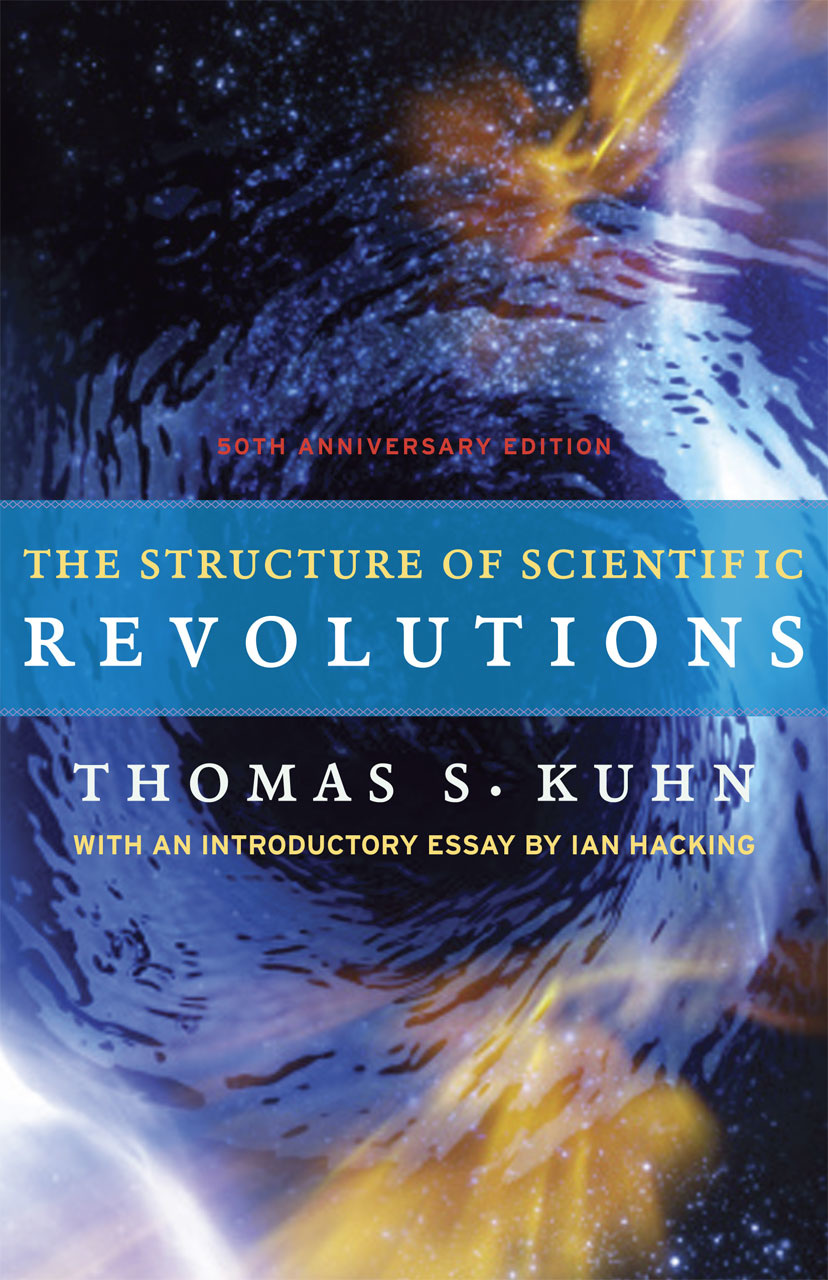
I've previously recommended reading Karl Popper's Conjectures and Refutations, as I feel Popper has provided the best set of epistemological tools and groundings for science to-date.  Thomas S. Kuhn is often trotted out as a more modern counterpoint to Popper, especially in his work in The Structure of Scientific Revolutions.  You can get the .pdf for free here, but I bought the book so I could write in the margins.
Picture
If anyone is familiar with Popper, Kuhn, and my own dabbling in epistemology, they will notice that the other two have influenced my epistemology dramatically.  Where many set up an opposition between Popper and Kuhn, I believe that antagonism (at least, in the realm of ideas and logic) is unwarranted.  Popper was engaged in a Bertrand-Russel-esque project of trying to use the tools of logic and reason to ground the functional applications of that logic in a manner consistent with the logicians' project.
Kuhn, on the other hand, is making an observation of the normative manner in which science is done.  Wielding the tools forged by Wittgenstein in the realms of language and cultural phenomena, Kuhn indirectly draws parallels between the manner in which science is actually done and the language games played in Wittgenstein's ontology.

Because of this difference in focus and approach, what results is Popper's "This is the epistemic grounding for the scientific exercise and methods" is set in opposition to Kuhn's "But this is what scientists are actually doing."  In reality, there can be a reasonable synthesis betwixt the two.  Popper, early on in Conjectures and Refutations, describes the different ontologies of the scientific method: essentialism/realism, instrumentalism, and what he calls "conjectures" but I like to call falsification (or, induction by falsifiability).  Popper makes a compelling case for falsification as the most cogent ontology of science.  Kuhn is, by his own admission, a staunch instrumentalist.
This instrumentalism is a matter of normativity.  In the case of the indirectly observable (particle physics, quantum mechanics, evolutionary and global climate sciences, etc.) Popper's defense of falsification and attack on instrumentalism begins to falter, but not fail.  Because instrumentalism has shown to get more quantifiable and marketable results (more journals published, more TV shows by Neil De Grasse Tyson, and more government grants), it has become the cultural MO for quite some time in the scientific community.

Kuhn explores the sociology and phenomena of scientific communities and the nature of change between different theories and methods of doing science.  Insofar as he is making normative claims, he does an excellent job of showing how things are done.  I feel that he fails in making claims as to how science should actually be done, essentially taking the normative case and saying that "it isn't fully developed yet, we ought to continue along this instrumentalist and diversified method of theory-making." without making a compelling case as to why that is the appropriate course of action.

This book, along with Poppers, is crucial to understanding the rationale and culture behind the claims made by physicists and philosophers of science today, especially when dealing with the limit-sciences of thins like quantum physics.  As a work of literature, it is a bit rough to read.  Where Popper takes 600-ish pages to explicate and defend 600 pages worth of material in a readable and concise manner, Kuhn takes 200-ish pages to explicate one central concept that could be done in less than 50 pages, applying the same rubric to multiple cases, over and over, in a manner that could be done more directly without losing any substance or rhetorical power.

There are more than one chapter in my unpublished book dedicated to epistemology and the synthesis between Popper and Kuhn, which have already strongly influenced certain blog posts, such as the post on Paradigmatic Awareness, in case one wants to explore related concepts before devoting time and money to reading the primary source.
0 Comments

Zomia Offline Games Pt.2

10/8/2015

0 Comments

 
Following closely on the heels of the first widely-known anarchist video game Zomia Offline Games has done it again.  Brian Sovryn of Sovryn Tech fame (or infamy), having set a challenging standard for what "anarchist game" means, has managed to meet this standard while releasing a more mainstream product.

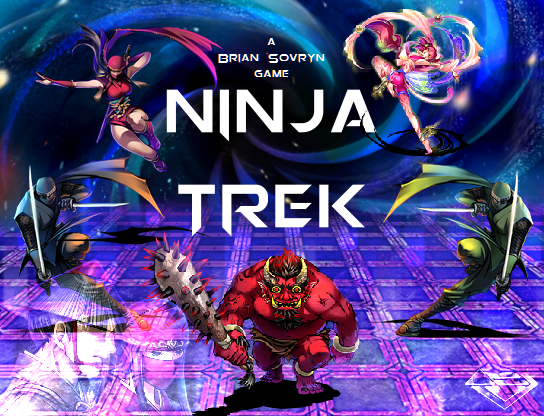
Ninja Trek is a more mainstream-style RPG than Hypercronius.  What I mean by that is that it is a little longer, has more combat, and less dialogue.  It also has a slightly smaller price tag (It's hard to get smaller than that of Hypercronius), at a mere .012 BTC.  I'm going to try and review Ninja Trek by it's own merits, rather than comparing it to Hypercronius, but we'll see how successful I am in that regard.
Picture
Gameplay/Story: The gameplay and story are pretty direct and intuitive.  If anyone has played Final Fantasy, Dragon Quest/Warrior, or any other classic J-RPG, you'll know how to play Ninja Trek.  Even as a short game, there are exciting story elements, fun puzzles, and a decent variety of baddies to clobber.  Most notable of the story elements are the handful of connections made to Hypercronius, implying that this game takes place thousands or hundreds of thousands of years after the events in Hypercronius; I don't want to spoil anything, so I'll leave it at that.  There's one main puzzle in the game which is simple but fun enough (I, in my sleep-deprived and mensa-puzzle mindset overlooked the solution and spent hours trying to figure it out). but general gameplay presents it's own puzzle-like atmosphere; grinding would undoubtedly make the game easier than avoiding combat at every possible chance, but how will that pay off in the long run?  I've only played as a straight-up magic user thus far, but may play through again using the fighter class and see how that changes gameplay for combat.  It is possible to beat the game without grinding if one is smart about equipment, items, and party composition, but I'm sure it would be easier to just grind along the way, killing everything in sight.  But that isn't the gameplay that I was looking for, given the subtext of the game's relationship to Hypercronius.
There are, like in Hypercronius, a lot of obvious and not-so-obvious references to esoteric ideologies, which add to the richness and apparent depth of the environments in the game.  One can't miss the use of the Ankh and the Garden of E.DIN, for example.
The Message:  Where Hypercronius is very, very story-heavy, Ninja Trek is a little more gameplay-driven.  As such the message is mostly contained in they payout at the end of the game ("Kami do not kill!").  The protagonist/player is faced with what could be called a moral dilemma which has profound implications in the world laid out by the game's plot.  If one is inclined to meditate on the story and the ending, they can easily tease out different implications concerning the nature of power, domination structures, and even the NAP.  
A little bit of meta-game message is bundled in as well: the game's EULA is actually the BipCot license.  It is pretty much the only EULA that I recommend anyone read, as it's the first ever license that I know of which is valid under the rubric of the NAP.
The Rub:  If one is expecting the level of text, story, character development, and drama experienced in Hypercronius, they will likely be disappointed.  In addition to being less dialogue-driven, there was a noticeable absence of voice acting and sexy sprite-humping.  However, the game stands very well on it's own as a classic RPG-style hack-and-slash.  I encountered one bug towards the end of the game that led to the game crashing, but I was unable to recreate the bug (it's just as likely my antivirus breaking things as it is a flaw in the actual game).  Fortunately, the age-old "RPG best practices" of saving constantly meant that I only lost about 5 minutes of gameplay to the crash.
The Verdict:  For just a few dollars, it's hard to go wrong.  Again, Zomia Offline Games successfully delivers on the stated goals of their project.  Ninja Trek is an excellent companion piece to Hypercronius in that they compliment each other's absences.  Where Hypercronius lacks the more traditional hack-and-slash RPG elements, Ninja Trek has it in spades; where Ninja Trek lacks full-motion video, voice acting, and visual-novel levels of dialogue, Hypercronius has more than enough.  Seeing as how one could get both for under $10, one can get the full anarchist 16-bit experience for the cost of a cheeseburger.
In it's own right, though, Ninja Trek is well worth the couple dollars for a couple hours of nostalgic adventure true to the medium which simply doesn't exist in the modern gaming landscape.  The anarchy just makes it that much more fun.
Oh, and you can buy it with Bitcoin in addition to the usual PayPal et al.

https://zomiaofflinegames.com/product/ninjatrek/

TL;DR:  4 out of 5 stars, fun game, good combat engine, fun environments, yay anarchy.  I'm certainly looking forward to Hypercronius II as I've come to expect great things from Zomia Offline Games.
0 Comments
    Picture

    Archives

    October 2015
    September 2015
    August 2015
    July 2015
    June 2015
    May 2015
    April 2015

    Categories

    All
    Anarchy
    AnCap
    AnCom
    Audiobook
    Behind The Scenes
    Behind-The-Scenes
    Bitcoin
    Blog Post
    Book
    Charity
    Conspiracy
    Constitution
    CPS
    Cryptocurrency
    Cryptography
    D&D
    Dead Philosophers
    Documentary
    Drugs
    Economics
    Education
    Encyclical
    Epistemology
    Essay
    Ethics
    Family Life
    Fiction
    Health
    Infographic
    License
    Logic
    NAP
    Naturalism
    Non Aggression Principle
    NVC
    Phenomenology
    Podcast
    Police
    Polyamory
    Property
    Radio
    Religion
    Review
    Rhetoric
    Rothbard
    Science
    Skepticism
    Slavery
    Survival
    Technology
    Tool
    Trivium
    Utopia
    Video
    Video Game
    War
    Webcomic

    RSS Feed

Powered by Create your own unique website with customizable templates.