Mad Philosopher
  • Main Blog
  • Daily Resource Suggestion
  • About
  • Contact
  • Support This Site
  • A Philosopher's 95 Theses

Programming for Freedom from Aliens!

21/9/2015

0 Comments

 
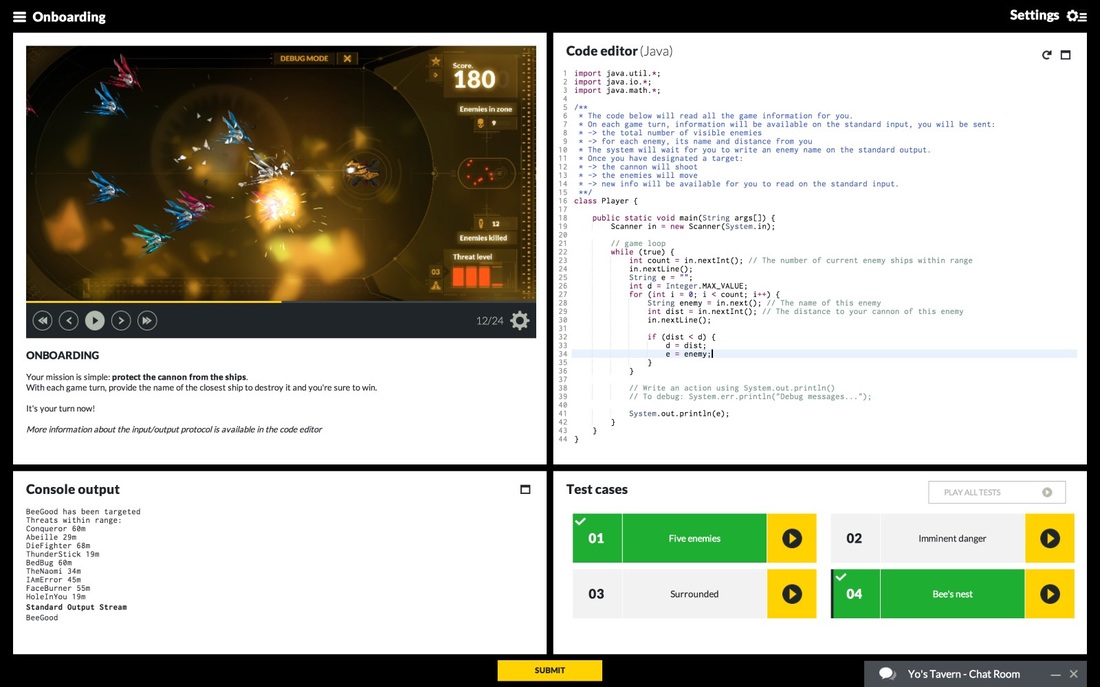
Today's suggestion is fun and practical and is only tangentially related to freedom or philosophy.  CodinGame is a game in which one programs their character in just about any programming language (no Rust, sorry).  The game runs through a series of tests to see how many contingencies your program can over, granting a higher score for more tests cleared.  I've been playing it this morning to see how much I remembered of Bash and Java and realizing that I've forgotten just about all my C(++).


What does this have to do with philosophy?  Programming languages are function-driven languages.  Like the difference between math, spoken language, artistic expression, programming language is another type of language.  In order to best explore reality, I believe a philosopher has to have at least a passing familiarity with these different kinds of expression, each with their unique grammar and vocabulary.  It gives one the epistemic and phenomenological tools required to see things from different angles, maybe even noticing regularities that would otherwise be missed.


Also, even though one may never find themselves programming autonomous drones to defend the planet from invading aliens, such know-how can server one's survival well, especially in high-tech self-providing environments.  In order to run an aquaponics bunker/greenhouse off of a handful of Raspberry Pi-s, one would likely have to do a little coding to get them to do what one wants.

Also, this game is fun and you should try it for that reason.
Picture
https://www.codingame.com
0 Comments

Zomia Offline Games Pt.2

10/8/2015

0 Comments

 
Following closely on the heels of the first widely-known anarchist video game Zomia Offline Games has done it again.  Brian Sovryn of Sovryn Tech fame (or infamy), having set a challenging standard for what "anarchist game" means, has managed to meet this standard while releasing a more mainstream product.

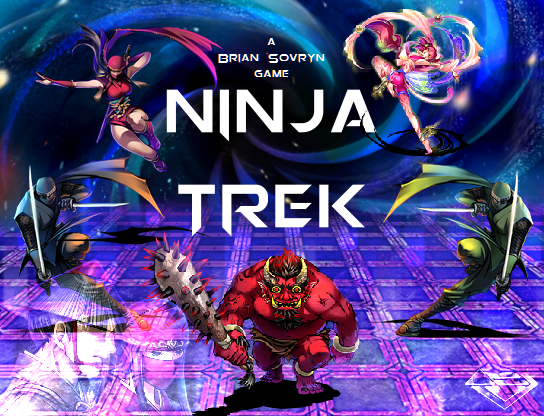
Ninja Trek is a more mainstream-style RPG than Hypercronius.  What I mean by that is that it is a little longer, has more combat, and less dialogue.  It also has a slightly smaller price tag (It's hard to get smaller than that of Hypercronius), at a mere .012 BTC.  I'm going to try and review Ninja Trek by it's own merits, rather than comparing it to Hypercronius, but we'll see how successful I am in that regard.
Picture
Gameplay/Story: The gameplay and story are pretty direct and intuitive.  If anyone has played Final Fantasy, Dragon Quest/Warrior, or any other classic J-RPG, you'll know how to play Ninja Trek.  Even as a short game, there are exciting story elements, fun puzzles, and a decent variety of baddies to clobber.  Most notable of the story elements are the handful of connections made to Hypercronius, implying that this game takes place thousands or hundreds of thousands of years after the events in Hypercronius; I don't want to spoil anything, so I'll leave it at that.  There's one main puzzle in the game which is simple but fun enough (I, in my sleep-deprived and mensa-puzzle mindset overlooked the solution and spent hours trying to figure it out). but general gameplay presents it's own puzzle-like atmosphere; grinding would undoubtedly make the game easier than avoiding combat at every possible chance, but how will that pay off in the long run?  I've only played as a straight-up magic user thus far, but may play through again using the fighter class and see how that changes gameplay for combat.  It is possible to beat the game without grinding if one is smart about equipment, items, and party composition, but I'm sure it would be easier to just grind along the way, killing everything in sight.  But that isn't the gameplay that I was looking for, given the subtext of the game's relationship to Hypercronius.
There are, like in Hypercronius, a lot of obvious and not-so-obvious references to esoteric ideologies, which add to the richness and apparent depth of the environments in the game.  One can't miss the use of the Ankh and the Garden of E.DIN, for example.
The Message:  Where Hypercronius is very, very story-heavy, Ninja Trek is a little more gameplay-driven.  As such the message is mostly contained in they payout at the end of the game ("Kami do not kill!").  The protagonist/player is faced with what could be called a moral dilemma which has profound implications in the world laid out by the game's plot.  If one is inclined to meditate on the story and the ending, they can easily tease out different implications concerning the nature of power, domination structures, and even the NAP.  
A little bit of meta-game message is bundled in as well: the game's EULA is actually the BipCot license.  It is pretty much the only EULA that I recommend anyone read, as it's the first ever license that I know of which is valid under the rubric of the NAP.
The Rub:  If one is expecting the level of text, story, character development, and drama experienced in Hypercronius, they will likely be disappointed.  In addition to being less dialogue-driven, there was a noticeable absence of voice acting and sexy sprite-humping.  However, the game stands very well on it's own as a classic RPG-style hack-and-slash.  I encountered one bug towards the end of the game that led to the game crashing, but I was unable to recreate the bug (it's just as likely my antivirus breaking things as it is a flaw in the actual game).  Fortunately, the age-old "RPG best practices" of saving constantly meant that I only lost about 5 minutes of gameplay to the crash.
The Verdict:  For just a few dollars, it's hard to go wrong.  Again, Zomia Offline Games successfully delivers on the stated goals of their project.  Ninja Trek is an excellent companion piece to Hypercronius in that they compliment each other's absences.  Where Hypercronius lacks the more traditional hack-and-slash RPG elements, Ninja Trek has it in spades; where Ninja Trek lacks full-motion video, voice acting, and visual-novel levels of dialogue, Hypercronius has more than enough.  Seeing as how one could get both for under $10, one can get the full anarchist 16-bit experience for the cost of a cheeseburger.
In it's own right, though, Ninja Trek is well worth the couple dollars for a couple hours of nostalgic adventure true to the medium which simply doesn't exist in the modern gaming landscape.  The anarchy just makes it that much more fun.
Oh, and you can buy it with Bitcoin in addition to the usual PayPal et al.

https://zomiaofflinegames.com/product/ninjatrek/

TL;DR:  4 out of 5 stars, fun game, good combat engine, fun environments, yay anarchy.  I'm certainly looking forward to Hypercronius II as I've come to expect great things from Zomia Offline Games.
0 Comments

Some Raw Philosophy

30/6/2015

0 Comments

 
I was going to share something else today as a daily resource suggestion, but then I stumbled across this gem and simply had to put it first.

8-Bit Philosophy is a series of youtube videos which explore what amounts to an extensive highlight reel of dead philosophers.  Giving a simplified and fast-paced overview of what the specific philosopher is "famous" for, it is a useful tool similar to History of Philosophy Without Any Gaps, but a little less involved.  Whereas History of Philosophy is a few hundred episodes in and only just approaching the late middle ages,8-bit Philosophy spans the entire historical swath of philosophy... with some gaps, of course.
The name, "8-bit Philosophy", describes the style, pretty well.  Using popular Nes games as the backdrop for amusing dialogue and depiction of the concepts being described.  The nostalgia factor more than makes up for the superficiality of the exploration of philosopher's ideas.
I do have some critiques of the series, of course.  There seems to be a pronounced bias in the videos that have been selected to be made thus far, focusing on what are likely the popular issues in philosophy these days: things like Marxism, gender fluidity, the american dream, etc.  I can't blame them, as they've gotta get and keep their view count in order to be profitable in an advertisement-based market, but it is something to be aware of.
Also, some videos tend to speak of philosopher's ideas in a manner which makes them sound as objective truth while other videos make it a point to say "According to so-and-so, it is likely that..." it is hard not to notice that there is a certain trend in which videos are produced in which way.
0 Comments

HYPERCRONIUS: a first among many

5/5/2015

0 Comments

 
The first widely-known anarchist video game has been released.  Brian Sovryn of Sovryn Tech fame (or infamy) has created his first video game.  As far as firsts go, it's an excellent first effort at game development and it sets a challenging standard for others to meet as far as calling a game an "anarchist game".

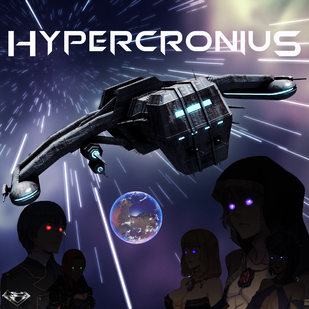
Hypercronius is a very short game, which would best be considered a teaser for a much larger universe that has been promised and planned by the developer.  For now, I believe a brief review is in order.
Picture
Gameplay/Story: As the motto of ZomiaOfflineGames is "Story First, Story Forever", this game does not disappoint.  The game plays very much like a 16-bit visual novel.  True to visual novel style, there is a lot of text and some fairly rich characters, histories, and relationships that the player will encounter in the brief time they have in the universe of Hypercronius.  Most notable in regards to story and history would be the 80's Sci-Fi vibe of empires and their outlaws, unique forms of space-racism, genocide, technology run amok, and a thinly-veiled scientific mysticism.  What makes Hypercronius stand out among a very familiar and comfortable genre is the not-so-hidden message of peace, love, and freedom.  Despite the familiar presence of conflict, hatred, and oppression, the titular character, Hypercronius, gives the player a unique view into the psyche of an anarchist in an unfree world.
There is a classic Final Fantasy-style combat system that has a solid implementation, if sparingly, used in this iteration of the Hypercronius series.  A brief look through the .zip file indicates that there are plans to expand the combat system and broaden the number and type of enemies faced in the future.  From what I know of the developer, though, the combat system will always be secondary to the story and adventure of the series.  This is a good thing, as combat systems, no matter how good they are, tend to become monotonous by the end of the game (Here's looking at you, Arkham and Assasin's Creed) but a good story keeps you till the end.
The Message:  As mentioned above, the driving force of this game is that it is the first widely-known anarchist video game.  The game, as brief as it is, does a very good job of laying down a hefty dose of what people call "thick libertarianism", but does so (for the most part) by way of character exposition, so as to not simply bludgeon the player over the head with the message.  "Thick libertarianism", for those not versed in the nomenclature, is essentially "a form of anarchism/libertarianism that argues for more than the bare essentials of anarchism".  For instance, there is a strong polyamory vs. traditional marriage thread and a less-overt anti-killing/violence thread which are not necessarily the inevitable conclusion of first principles such as the NAP (non-aggression principle).  Rather than weakening the overall case made for anarchism, though, the way that the characters embrace these ideologies serves to enrich the universe that they reside in and prevents them from becoming a cardboard cutout holding an anarchist bullhorn.  In my opinion, it makes them more fleshed-out as characters with what may be considered their own unique set of flaws. and vices.  The cartoonish overreactions of their antagonists to these ideas is both amusing and right in line with the 80's sci-fi vibe.
The Rub:  Aside from a couple typos, the dialogue (the main feature of the game) is accessible and entertaining enough to carry the game in its own right, much like a good visual novel.  However, audiences that are more accustomed to strategy and kick-in-the-door roleplay may begin to lose interest sometime in-between the dulcet and savory introduction to the universe (as provided by Dr. Stephanie Murphy) and where gameplay actually begins.
Also, the game is sort-of NSFW.  Implied 16-bit sprite-humping is amusing it, but it is something to be aware of if you're going to whip out your flash drive during lunch at work.  The sexier bits seemed to be shoehorned in to the story and detracted from the overall flow of the narrative.  The character dialogue would have served the same purpose as the cutscenes in most cases.  In other words, I don't see anything wrong with the scenes in themselves, but maybe trimming the four interludes down to two and simply implying the other two would have kept the flow of the narrative at a healthy pace all the way through the game.
The Verdict:  For $7, it's hard to go wrong.  The game could easily fit between "Binding of Issac" and "Don't Starve" in the indie steam games library.The message of freedom isn't for everyone, but the game is fun in it's own right and certainly deserves a shot from anyone with $7 or .02 BTC laying around.  That's right, you can buy it with bitcoin.  Also, it's entirely DRM-free and portable, which automatically makes it a cooler game than 99% of the marketplace.  I'm sure with a little work that you can get your hands on the game for free because of it, but the developer (like all anarchists) doesn't believe in intellectual property, so he's not going to come after you with the guns of the state for doing so.  However, this is one game that I will not be pirating, as Brian deserves every bitcoin for homesteading the video game industry.

http://zomiaofflinegames.com/product/hypercronius/

TL;DR:  4 out of 5 stars, fun game, lots of reading, don't play at work unless your boss is really cool, yay anarchy.
0 Comments
    Picture

    Archives

    October 2015
    September 2015
    August 2015
    July 2015
    June 2015
    May 2015
    April 2015

    Categories

    All
    Anarchy
    AnCap
    AnCom
    Audiobook
    Behind The Scenes
    Behind-The-Scenes
    Bitcoin
    Blog Post
    Book
    Charity
    Conspiracy
    Constitution
    CPS
    Cryptocurrency
    Cryptography
    D&D
    Dead Philosophers
    Documentary
    Drugs
    Economics
    Education
    Encyclical
    Epistemology
    Essay
    Ethics
    Family Life
    Fiction
    Health
    Infographic
    License
    Logic
    NAP
    Naturalism
    Non Aggression Principle
    NVC
    Phenomenology
    Podcast
    Police
    Polyamory
    Property
    Radio
    Religion
    Review
    Rhetoric
    Rothbard
    Science
    Skepticism
    Slavery
    Survival
    Technology
    Tool
    Trivium
    Utopia
    Video
    Video Game
    War
    Webcomic

    RSS Feed

Powered by Create your own unique website with customizable templates.