Mad Philosopher
  • Main Blog
  • Daily Resource Suggestion
  • About
  • Contact
  • Support This Site
  • A Philosopher's 95 Theses

Charity in a Free Society

31/8/2015

0 Comments

 
After nearly a week of silence, I have more suggestions and I will have a full post out this weekend.

Today, I recommend this short piece about effective charity work.  It's published by Philanthropy Roundtable, an organization focused exclusively on researching and promoting effective charity work.  While their work sometimes borders on leftism and puritanism, depending on the author and editor, there is a lot of good work and truth that comes out of the Philanthropy Roundtable.  I have only recently discovered this website, but I have found a lot of support for arguments I have been making for a good time now, and some food for thought concerning things I haven't considered before.

I don't agree with everything on the site, or even in today's suggested article, But it certainly has more to work with than what I hear most often... and I work for the world's most prolific and successful charitable organization.  Just think what could happen in the Catholic Church if they were to approach the corporal works of mercy from an angle that has been empirically shown to be more effective than an 1,500 year old socialist welfare program.

Work is the Best Charity for the Poor Presents an argument that resolves many of the issues I have had with missionary work upon my return from Mexico and closely parallels my understanding of prisons and exile in a free society, which will be an upcoming full-post.

0 Comments

Milton on Responsibility to the Poor

25/8/2015

0 Comments

 
Today's resource isfive minutes of Milton Friedman.  It will sound quite familiar to anyone who's been exposed to the propaganda of "American Exceptionalism"... but corrected in some very important ways.  There isn't much substance to the five minutes, but it effectively demonstrates the flaws in the rhetoric of "fiscal conservatives" when talking to lefties.
It's actually an excerpt from a series of lectures that became a TV series and a book.  I've read parts of the book and seen about half of the TV show, so I can't speak for the whole thing, but I recommend giving them a look, as the parts I have seen are legit.  While the five-minute video from today is more rhetoric than substance, the book and the TV series is much more meaty.
0 Comments

Logic Test

24/8/2015

0 Comments

 
Today's resource suggestion is a simple logic test and the explanation concerning the results of that test.  "How Logical Are You?" is a short, simple video that explains what amounts to one of the foundations of Bertrand Russel's logic works.  These sorts of puzzles ought to be commonly known to people at large as, without them, illogical assumptions and prejudices become the cultural narrative.  I'm speaking less about racism and more about the inevitable rise of criminal and misanthropic institutions.

You can find the video here, on YouTube.  I got it right. I say this not to brag, but to prove that there is no excuse for not getting it right, if my dumb ass can.  If you don't get it right, that's fine; you can learn (with time and effort) how to think logically, too.
The rules to the puzzle may not be very clearly stated.  The cards have two sides.  The rules concerning "if one side is X, the other side is Y" refers to individual cards, not the set.  If you want a clue, I recommend hearkening back to what Karl Popper thinks about knowledge and how one increases certainty..

Also, while it sounds like the video poo-poos inductive reasoning, if you watch it all the way through, they clearly show the utility of induction, even if it isn't logic, per-se.
0 Comments

Price Discrimination, an Introduction

20/8/2015

0 Comments

 
More economics, today; sorry people.  As my more recent full posts have demonstrated, I find the influence of economics on every aspect of daily life to be unavoidable.  Many people do not understand the relationship between economic principles and daily life, let alone how insidious the manipulations of the economically-minded can be with regards to individual flourishing.

For instance, many people claim that "Without government, there would be no way to be certain that our alcohol isn't poisoned."  Interestingly enough, with government, we can be certain that our alcohol will be poisoned.  By law, any drinkable alcohol (ethanol) that isn't explicitly approved for drinking (and taxed at the designated rate for drinking alcohol) must be poisoned so as to prevent arbitrage between affordable alcohol and artificially inflated drinking alcohol prices.  This is actually the case in almost every consumer good industry.  Industrial plastics vs. Dental plastics, and now even software that is designed to stop working at different points in time for different consumers are other prime examples.

I recommend, today, that one watch this video in order to get the basics on what price discrimination actually is, from an economics standpoint, and then read this article about the social impact government involvement in such practices has.
0 Comments

Bastiat; a True Founding Father

19/8/2015

0 Comments

 
Today's resource suggestion is an excerpt from Economic Harmonies by Frederic Bastiat.
A 19th-Century philosopher and economist, Bastiat is credited with being one of the chief figures in classical liberalism which is, effectively, the progenitor of libertarianism and, ultimately, modern anarchism.
The excerpt is only 9 pages long, large-type, but it effectively expresses the basis of liberty and of the Anarcho-Capitalist position.  The first 8 paragraphs are filled with 19th century talk of God and creation and the created nature of man, but his more concrete observations made in and after these paragraphs can be confirmed and defended by atheists, too.
If reading isn't your forte or you desire a context for this work, I recommend reading Economic Harmonies or listening to/watching this lecture by Tom Woods.  It also provides a broader exploration of Bastiat's works, so it can be useful even after reading this excerpt.
0 Comments

And Now for Something Completely Different

18/8/2015

0 Comments

 
After several very serious and life-impacting resource suggestions and some philosophically-involved full posts, I figures a shot, fun, introduction to phenomenology is in order.
Nothing too involved here, just a funny youtube video I found last week.  It's funny to people familiar with phenomenology, and may get those unfamiliar with it interested in the field of study.
https://www.youtube.com/watch?t=98&v=cVGAxMo-kiw
0 Comments

What Does it Mean When we Live in Computers?

18/8/2015

0 Comments

 
Today's resource is tied to last week's full post, and relates to future posts on property.  It relates to my recent entreaty for prospective Windows 10 users, as well.  Today's resource is a long-ish, but important video that gives a great overview on the role technology plays in our lives, the role cryptography plays in that technology, and the ridiculousness of the laws and social constructs we have built around that technology.  While his suggested solutions are certainly flawed, at least this guy is willing to address the issues and their existential ramifications.
https://www.youtube.com/watch?t=13&v=_J_9EFGFR-Y
0 Comments

Windows 10 is Great...

13/8/2015

0 Comments

 
Windows 10 is great,as long as you fix it first.  And by "fix", I mean "turn everything off."

Microsoft has a tendency to build a decent system, and then heap mountains of bullshit on top of it, turn it on by default, and charge you for it.  More concerning than your machine doing things that you don't know about, or Microsoft trying to charge you for it, is the reality that each one of these settings presents a serious security risk.

Even though everyone knows why security is important (even if they choose to ignore them), it's important to remind people that even if you've got a boring vanilla machine that you use exclusively for words processing and email, these security risks open ones machine to being used by malicious crackers for whatever nefarious purposes.  I am occasionally called upon to help people get a machine running after it bogs down or breaks... every time, it's so riddled with bitcoin miners for ISIS, data miners from the NSA, ad/spyware for evil corporations, tor nodes and proxy gateways... and any one of these things can, if the government so chooses, get one landed in prison or killed.

So, in a manner of speaking, making sure you don't use the default settings on Windows 10 is a life-or-death situation.  Here's  a handy guide to at least pretend you're being cautious.
Picture
And here's a short song about just one of the many ill-advised portions of the License Agreement:
0 Comments

Kuhn on Philosophy of Science

12/8/2015

0 Comments

 
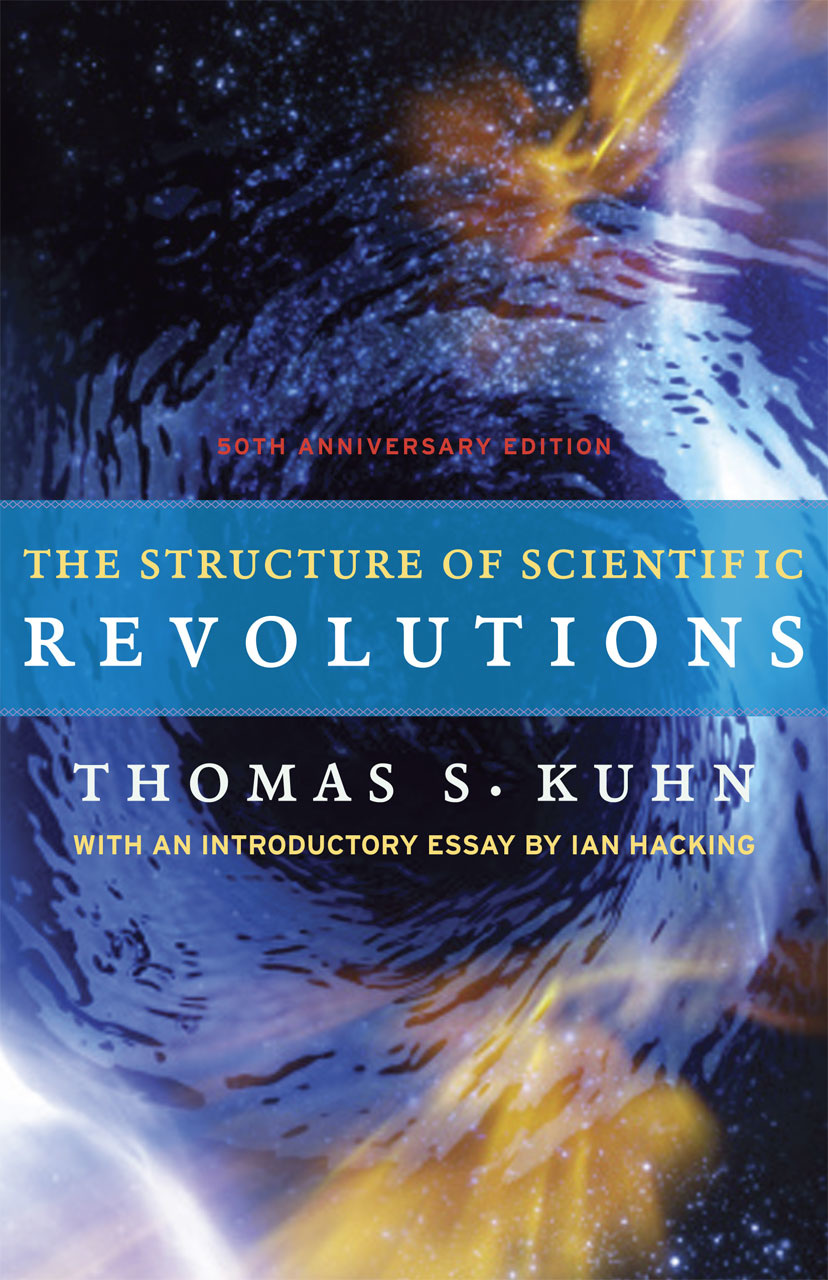
I've previously recommended reading Karl Popper's Conjectures and Refutations, as I feel Popper has provided the best set of epistemological tools and groundings for science to-date.  Thomas S. Kuhn is often trotted out as a more modern counterpoint to Popper, especially in his work in The Structure of Scientific Revolutions.  You can get the .pdf for free here, but I bought the book so I could write in the margins.
Picture
If anyone is familiar with Popper, Kuhn, and my own dabbling in epistemology, they will notice that the other two have influenced my epistemology dramatically.  Where many set up an opposition between Popper and Kuhn, I believe that antagonism (at least, in the realm of ideas and logic) is unwarranted.  Popper was engaged in a Bertrand-Russel-esque project of trying to use the tools of logic and reason to ground the functional applications of that logic in a manner consistent with the logicians' project.
Kuhn, on the other hand, is making an observation of the normative manner in which science is done.  Wielding the tools forged by Wittgenstein in the realms of language and cultural phenomena, Kuhn indirectly draws parallels between the manner in which science is actually done and the language games played in Wittgenstein's ontology.

Because of this difference in focus and approach, what results is Popper's "This is the epistemic grounding for the scientific exercise and methods" is set in opposition to Kuhn's "But this is what scientists are actually doing."  In reality, there can be a reasonable synthesis betwixt the two.  Popper, early on in Conjectures and Refutations, describes the different ontologies of the scientific method: essentialism/realism, instrumentalism, and what he calls "conjectures" but I like to call falsification (or, induction by falsifiability).  Popper makes a compelling case for falsification as the most cogent ontology of science.  Kuhn is, by his own admission, a staunch instrumentalist.
This instrumentalism is a matter of normativity.  In the case of the indirectly observable (particle physics, quantum mechanics, evolutionary and global climate sciences, etc.) Popper's defense of falsification and attack on instrumentalism begins to falter, but not fail.  Because instrumentalism has shown to get more quantifiable and marketable results (more journals published, more TV shows by Neil De Grasse Tyson, and more government grants), it has become the cultural MO for quite some time in the scientific community.

Kuhn explores the sociology and phenomena of scientific communities and the nature of change between different theories and methods of doing science.  Insofar as he is making normative claims, he does an excellent job of showing how things are done.  I feel that he fails in making claims as to how science should actually be done, essentially taking the normative case and saying that "it isn't fully developed yet, we ought to continue along this instrumentalist and diversified method of theory-making." without making a compelling case as to why that is the appropriate course of action.

This book, along with Poppers, is crucial to understanding the rationale and culture behind the claims made by physicists and philosophers of science today, especially when dealing with the limit-sciences of thins like quantum physics.  As a work of literature, it is a bit rough to read.  Where Popper takes 600-ish pages to explicate and defend 600 pages worth of material in a readable and concise manner, Kuhn takes 200-ish pages to explicate one central concept that could be done in less than 50 pages, applying the same rubric to multiple cases, over and over, in a manner that could be done more directly without losing any substance or rhetorical power.

There are more than one chapter in my unpublished book dedicated to epistemology and the synthesis between Popper and Kuhn, which have already strongly influenced certain blog posts, such as the post on Paradigmatic Awareness, in case one wants to explore related concepts before devoting time and money to reading the primary source.
0 Comments

The FBI *are* the Terrorists

11/8/2015

0 Comments

 
With this evocative title and a mere 10 minute video, I don't think I need to do much more by way of introduction.
There is a startling amount of information available (and it's growing) concerning how exactly the FBI "catches" the terrorists they trot out on the 6 o'clock news.  This video is a good introduction and launching point.  If you dig far enough, you'll find that there's a lot of publicly available information about how the whole program is bullshit.  Digging further, you'll find some interesting confirmed government conspiracies.  Digging a bit more will land you in full-blown conspiracy-theory town.
For today, though, I just recommend watching this 10-minute video.
0 Comments
<<Previous
    Picture

    Archives

    October 2015
    September 2015
    August 2015
    July 2015
    June 2015
    May 2015
    April 2015

    Categories

    All
    Anarchy
    AnCap
    AnCom
    Audiobook
    Behind The Scenes
    Behind-The-Scenes
    Bitcoin
    Blog Post
    Book
    Charity
    Conspiracy
    Constitution
    CPS
    Cryptocurrency
    Cryptography
    D&D
    Dead Philosophers
    Documentary
    Drugs
    Economics
    Education
    Encyclical
    Epistemology
    Essay
    Ethics
    Family Life
    Fiction
    Health
    Infographic
    License
    Logic
    NAP
    Naturalism
    Non Aggression Principle
    NVC
    Phenomenology
    Podcast
    Police
    Polyamory
    Property
    Radio
    Religion
    Review
    Rhetoric
    Rothbard
    Science
    Skepticism
    Slavery
    Survival
    Technology
    Tool
    Trivium
    Utopia
    Video
    Video Game
    War
    Webcomic

    RSS Feed

Powered by Create your own unique website with customizable templates.