Today's resource suggestion is a short and entertainingvideo with a very strong point that is made. I think there may be some metaphysical commitments hiding in the video that I don't agree with, but those disagreements are immaterial to the case presented.
|
Today's resource suggestion is a tool that I use about three-to-five times a week. Or, rather, an article about an invaluable tool. This article is an excellent discussion concerning the nature of the Stanford Encyclopedia of Philosophy. Covering the methods, philosophy, and history behind the encyclopedia, the author explores why the SEP is the high-water mark of internet culture and it's role in society. The author also addresses the strengths and weaknesses concerning the SEP, when compared to other resources such as Wikipedia. Addressing nearly every aspect of the SEP, this article is very useful in explaining how it works and why... unfortunately, they do not appreciate the fact that the SEP is currently funded by theft. In a free world, either private universities would be sustaining the SEP or, more likely, the SEP would be supported by private benefactors or hosted on MaidSafe, sustaining itself.  True to form, as a "philosophical encyclopedia", the SEP covers a wide array of subjects, many of which pertain to the daily life of non-philosophers. I have recently begun linking to SEP articles in my main blog posts, as it has come to my attention that I'm using vocabulary words that normal people have a hard time grasping. It seems to have helped at least a couple of my readers, and I think the SEP can help everyone understand the world a little bit better.  The time has come, I think, to purge some podcasts off my list. I have more podcasts than I have time, and some of them have ceased providing utility for my current situation... which happens a few times a year. Usually, when this time comes, I share on facebook the ones that I am abandoning and why. Now that I have a platform on which I talk about podcasts incessantly, I figure this may be a better place to do so.
Podcasts I continue to listen to (in order of priority):
Podcasts I no longer listen to:
Podcasts that have been discontinued:
I've previously recommended reading Karl Popper's Conjectures and Refutations, as I feel Popper has provided the best set of epistemological tools and groundings for science to-date. Thomas S. Kuhn is often trotted out as a more modern counterpoint to Popper, especially in his work in The Structure of Scientific Revolutions. You can get the .pdf for free here, but I bought the book so I could write in the margins. 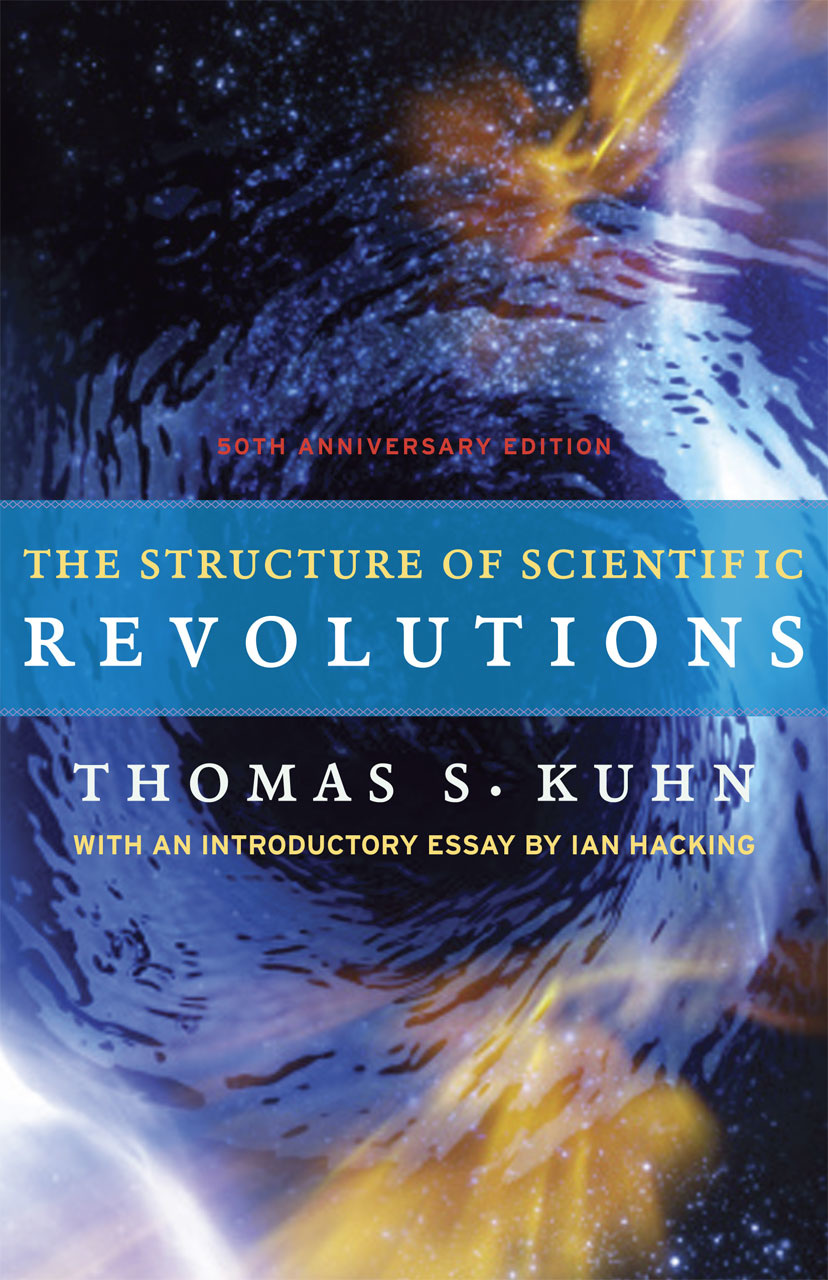 If anyone is familiar with Popper, Kuhn, and my own dabbling in epistemology, they will notice that the other two have influenced my epistemology dramatically. Where many set up an opposition between Popper and Kuhn, I believe that antagonism (at least, in the realm of ideas and logic) is unwarranted. Popper was engaged in a Bertrand-Russel-esque project of trying to use the tools of logic and reason to ground the functional applications of that logic in a manner consistent with the logicians' project.
Kuhn, on the other hand, is making an observation of the normative manner in which science is done. Wielding the tools forged by Wittgenstein in the realms of language and cultural phenomena, Kuhn indirectly draws parallels between the manner in which science is actually done and the language games played in Wittgenstein's ontology. Because of this difference in focus and approach, what results is Popper's "This is the epistemic grounding for the scientific exercise and methods" is set in opposition to Kuhn's "But this is what scientists are actually doing." In reality, there can be a reasonable synthesis betwixt the two. Popper, early on in Conjectures and Refutations, describes the different ontologies of the scientific method: essentialism/realism, instrumentalism, and what he calls "conjectures" but I like to call falsification (or, induction by falsifiability). Popper makes a compelling case for falsification as the most cogent ontology of science. Kuhn is, by his own admission, a staunch instrumentalist. This instrumentalism is a matter of normativity. In the case of the indirectly observable (particle physics, quantum mechanics, evolutionary and global climate sciences, etc.) Popper's defense of falsification and attack on instrumentalism begins to falter, but not fail. Because instrumentalism has shown to get more quantifiable and marketable results (more journals published, more TV shows by Neil De Grasse Tyson, and more government grants), it has become the cultural MO for quite some time in the scientific community. Kuhn explores the sociology and phenomena of scientific communities and the nature of change between different theories and methods of doing science. Insofar as he is making normative claims, he does an excellent job of showing how things are done. I feel that he fails in making claims as to how science should actually be done, essentially taking the normative case and saying that "it isn't fully developed yet, we ought to continue along this instrumentalist and diversified method of theory-making." without making a compelling case as to why that is the appropriate course of action. This book, along with Poppers, is crucial to understanding the rationale and culture behind the claims made by physicists and philosophers of science today, especially when dealing with the limit-sciences of thins like quantum physics. As a work of literature, it is a bit rough to read. Where Popper takes 600-ish pages to explicate and defend 600 pages worth of material in a readable and concise manner, Kuhn takes 200-ish pages to explicate one central concept that could be done in less than 50 pages, applying the same rubric to multiple cases, over and over, in a manner that could be done more directly without losing any substance or rhetorical power. There are more than one chapter in my unpublished book dedicated to epistemology and the synthesis between Popper and Kuhn, which have already strongly influenced certain blog posts, such as the post on Paradigmatic Awareness, in case one wants to explore related concepts before devoting time and money to reading the primary source.
An oldie, but goodie. In this one, Cantwell takes apart an argument provided by a self-proclaimed atheist who is anything but. Cantwell *is* an atheist, while I am most certainly not, I can appreciate the integrity of his position and the fact that he manages to come around to the Truth in so many things. Had he been raised by decent Catholics, he may not have had so strong an aversion to the philosophy which so closely parallels his own.
Anyway, Cantwell disassembles his arguments with dramatic flourish. Some responses he provides are less compelling than others, but those that claim to be atheist or those that believe that paying your taxes, calling your senator, and voting is compatible with Christianity ought to watch this video. The first podcast I ever downloaded, The Partially Examined Life, is a perennial staple of my podcast-listening and self-education. Their Zero Episode does a great job of introducing their project. I have gotten the most out of their podcast by reading the material ahead of time, listening to the podcast, and then talking to someone (anyone) about the material discussed and trying to tease any kind of intellectual response out of them. Previous attendees of my mostly-defunct philosophy club will recognize several of these episodes and ideas. I understand several of the earlier episodes (my favorite ones) are behind a paywall these days, but people have to make a living, right? They're up on iTunes and all the other podcast aggregators.  My favorite episode is probably their 100th episode... however, their commentaries on Camus, MacIntyre, Antigone, etc. are amazing. I recommend starting at the beginning and moving on from there, as they do build on past episodes in order to be able to address higher-level and more esoteric concepts later on.
A Little Way of Homeschooling: Thirteen Families Discover Catholic Unschooling is an interesting work. It simultaneously provides the more rigorous and analytic exploration of unschooling that I was looking for after reading Radical Unschooling and tries to answer a question that had never crossed my mind: "Can a Catholic home/unschool?" What Suzie Andres calls "The Little Way of unschooling", I have been referring to as "the Tao of family life" for a while now. The proper application of effort in the proper area of life. Too much, and you break something, too little and nothing gets accomplished. In the case of education and developing healthy relationships within the family, it requires a lot of focus and self-knowledge, unschooling seems to be an excellent method of discerning the proper application of effort. 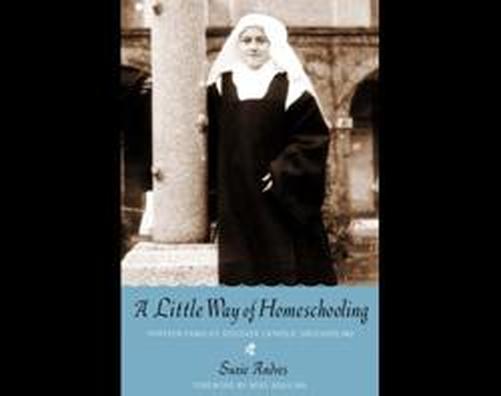 I know I have been writing about primarily Catholic issues a fair amount lately, but pagan or atheist readers could easily take this book and exchange out references to trusting God to believing in the all-present life force or whatever or trusting in humanity and still get the same results.
Where I was already pretty much sold on unschooling before reading Radical Unschooling, my wife was suspicious before reading the book and then doubly so after reading that book. In the interest of helping me out and giving my ideas a chance, she sought out this book herself at the library. Now, she's almost totally sold on the idea, and I have the reading list in the back of the book to help me find more resources that may be directed more towards people such as myself. I would strongly recommend that Catholics with children should read The Little Way of Homeschooling, even if they are happy with whatever schooling situation they are currently in. If non-Catholics are pursuing unschooling, this resource may still be useful, but they may want to read Dayna Martin (if they are of a freedom-minded persuasion) or John Holt. Before any commenters speak up, I am totally aware that I plug a lot of Tom Woods on this part of the blog. Some day, I will be plugging a lot of Rothbard and Spooner, but I need to get my priorities sorted out with them... they were very prolific writers and, while it would behove anyone and everyone to read the entirety of their works, I feel it would be prudent to focus on the highlight reel in this section. I am doing the same with Woods, currently. 14 Hard Questions for Libertarians: Answered is an excellent resource. Where reading Rothbard and thinking things through from first principles (fundamental economics, the NAP, etc.) will inevitably produce the same or similar answers to those in this book, it is an amazingly simple and accessible resource for beginners, people who can't be bothered making freshman-level arguments with detractors, and people who may have done all the heavy lifting themselves and may have a couple blind spots. I, personally, land in all three categories. I'm an anarchist of only about two years, and I have a lot of catching up to do, I've already cited and linked to this book twice on facebook in arguments with people that are intelligent but ignorant, and was surprised to find myself reassessing some of my stances on things. Most especially my position on Prisons in a Free Society has come into question, and I've been inspired to do more reading in primary sources and more critical thinking about how I arrived at my position. I expect to make a full blog post in the future, once I'm done researching and revising my position. 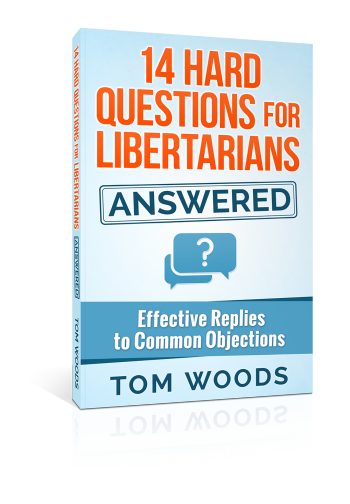 Today's resource is a little heavy on the terminology, but I think those that are even slightly above-average can at least get the main thrust of the discussion. Today's resource suggestion is the 228th installment of the History of Philosophy Podcast, Without Any Gaps. Truly, the entire series thus far is an invaluable resource for even one who is trained in philosophy, as there really are no gaps in this production, filling in whatever may be overlooked by directed scholarship. Each episode builds on the last, true to the history of philosophy. So, if you find that this episode is beyond your comprehension, you can simply move back through history until you find something that's more your pace. Honestly, though, everyone should start at the beginning and work their way to this episode. The episodes are short and entertaining (as entertaining as the subject matter can be, anyway), and released weekly so, even with more than 200 episodes released, you can still catch up.  From Sophocles' Oedipus trilogy, Antigone is as powerful and as tragic as the other two works. Antigone (the titular character and daughter of Oedipus and his mom), in my opinion, sets the example for all men and women of virtue, even 2,500 years after the story was written. The poetry and power expressed in the play (more so in some translations than others) is tangible and should be enough to keep the reader's attention. If it isn't though, the cast of The Partially Examined Life have done an excellent reading of the play , along with Lucy Lawless and Paul Provenza. 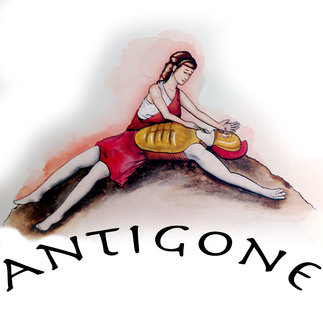 You can read their particular translation here.
|
Archives
October 2015
Categories
All
|
 RSS Feed
